What Is the 2-2-2 Rule for Teeth in Maplewood, NJ?
Quick Answer: The 2-2-2 rule is a simple habit for healthy teeth: brush for two minutes, two times a day, and see your dentist two times a year. Each part has a job. Brushing clears away daily plaque, and checkups catch problems early. Tulip Dental in Maplewood, NJ can help you set up a schedule that fits your mouth.
Think about the last time you brushed in a hurry. Maybe you were running late, so you gave your teeth a quick once-over and called it done. The 2-2-2 rule is a way to make good care easy to remember, so those rushed mornings don't turn into a habit.
What the 2-2-2 Rule Means
The rule has three parts, and each one is a “2”:
- Brush for 2 minutes each time
- Brush 2 times a day
- Visit the dentist 2 times a year
It is not a complicated routine. It is a short checklist that covers daily care at home and regular care at the dental office.
The First 2: Two Minutes of Brushing
Two minutes feels long until a timer is running, and most people stop sooner than they think. The Mayo Clinic notes that the American Dental Association recommends brushing with fluoride toothpaste for at least two minutes each time, and flossing once a day.
That much time gives you a chance to reach every tooth. A simple way to do it is to spend about 30 seconds on each part of your mouth: upper left, upper right, lower left, and lower right.
The Second 2: Two Times a Day
Brushing in the morning and at night covers the two times plaque has the most chance to build up. The morning brush clears away what built up overnight. The night brush removes the day's food and plaque before you sleep, when there is less saliva to help protect your teeth.
Use a soft-bristled brush and gentle strokes. Pressing hard does not clean better and can irritate your gums.
The Third 2: Two Dental Visits a Year
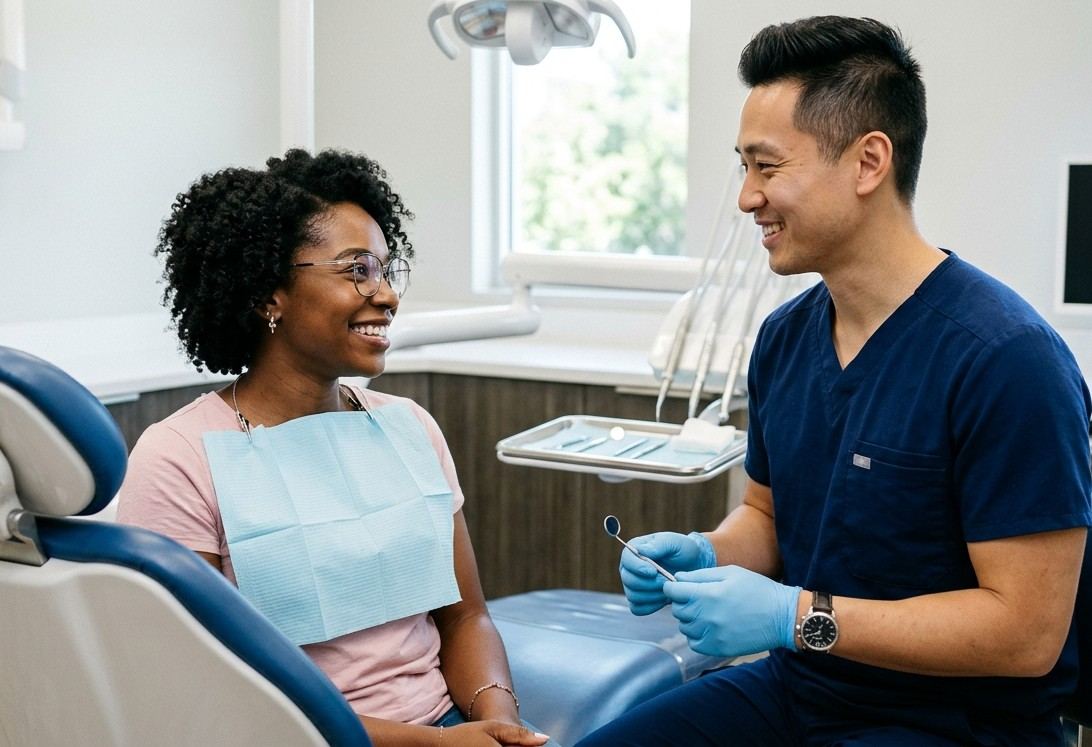
Early cavities and gum trouble rarely cause pain, which is why the dental visit is the number most people let slip. A checkup lets your dentist look for small problems before they grow, and a professional cleaning removes hardened plaque that brushing cannot.
Two visits a year is a common schedule, but it is a starting point. Your dentist can tell you if you should come in more or less often.
Does the Rule Cover Everything?
Not quite. The rule leaves out the space between your teeth, where a brush cannot reach well. Flossing once a day fills that gap. Drinking water and cutting back on sugary snacks and drinks also help protect your teeth between visits.
Think of the 2-2-2 rule as the base, with floss and good food choices added on top.
Making the Habit Stick
A few small changes can help:
- Use a two-minute timer or play a song of that length
- Tie brushing to things you already do, like making coffee or setting an alarm
- Keep a spare toothbrush where you will see it
- Set a reminder to book your next visit before you leave the office
- Help children brush for the full two minutes until they can do it well alone
Who May Need More Than the Rule
Some people need extra care. Gum disease, a history of cavities, braces or other dental work, and certain health conditions can all call for more frequent visits or special tools. If you have a dry mouth, smoke, or have had a lot of dental work, ask your dentist what a good schedule looks like for you.
When Something Hurts
The rule is for prevention, not for treating a problem that is already there. A toothache, a broken tooth, or a swollen gum should be seen quickly, and emergency dentistry can help. If you have severe swelling, trouble breathing or swallowing, or bleeding that will not stop, go to the nearest emergency room or call 911.
If a cavity has already started, a filling can stop it from spreading. A damaged tooth may need a crown. Catching these problems early is one more reason the visits matter.
Questions to Ask Your Dentist
If you've been searching “dentist near me” for a checkup, bring a few questions:
- How often should I come in, based on my own mouth?
- Am I brushing long enough and in the right places?
- Do I need a different toothbrush, toothpaste, or floss?
- Are there any early problems I should watch for?
- What will my plan cover for visits and cleanings?
How Tulip Dental Helps
At Tulip Dental, preventive care starts with a look at your teeth and a talk about your habits. As a dentist in Maplewood, NJ serving families across the area, the team can explain how the 2-2-2 rule fits your needs and what to change if something is not working.
We welcome patients from Maplewood, South Orange, Irvington, and Vauxhall. Many dental plans include preventive visits, so our team can help you check what yours covers.
Start Your Next Two Visits
It's easier to keep a habit when the next appointment is already on the calendar. Call Tulip Dental at 973-671-5500, and we'll help you find a time that works for your schedule.
Frequently Asked Questions
It means brushing for two minutes, two times a day, and seeing a dentist two times a year. It is a short checklist that covers both daily care at home and regular care at the dental office. Many people also add daily flossing.
It is a strong starting point, but it leaves out cleaning between your teeth. Flossing once a day helps fill that gap. Some people also need extra visits or tools, so your dentist can tailor the plan.
Yes, children can follow it with a parent's help. Younger children often need support to brush for the full two minutes and to reach every tooth. Regular checkups also help spot problems early as their teeth grow.
Some people with very healthy mouths may do well with fewer visits, but that is a decision for your dentist, not a rule. Skipping visits can let small problems grow without any pain. Ask your dentist what schedule fits you.
Many plans include preventive visits, but coverage varies. Check your plan or ask our team before you book. We can help you understand what your benefits may cover.

